Voting in the City of Nanaimo? Click here to use our Know Your Vote tool for a custom ranking of Mayor and Council candidates based on how much you agree, or disagree, with them on key issues.
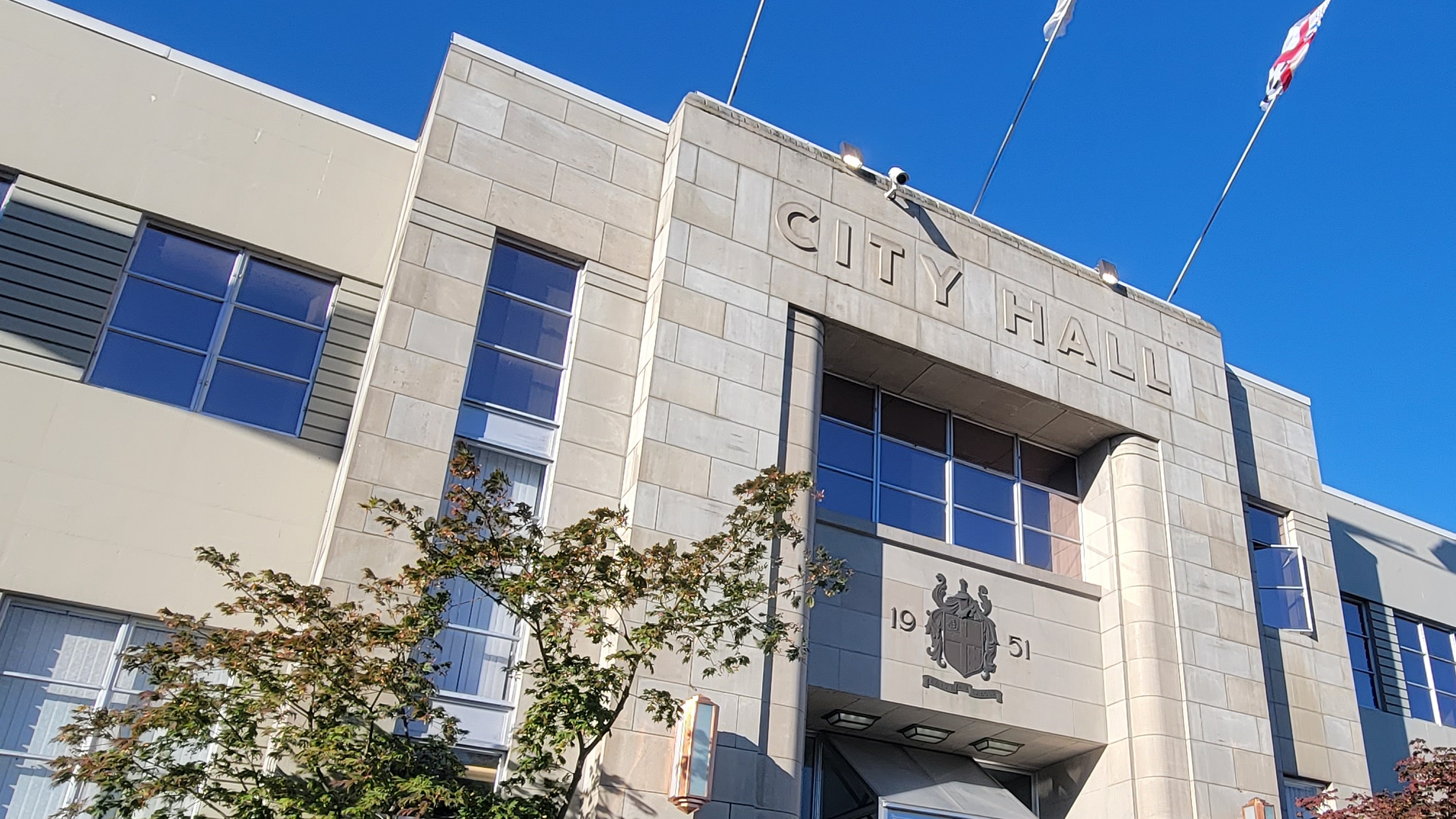
Managing increasing costs for essential infrastructure replacement, with an even increasing ask from local taxpayers is the topic of our second deep-dive into results from our Know Your Vote survey. (Image Credit: File photo/NanaimoNewsNOW)
2026 municipal election

Know Your Vote: Balancing tax increases with essential infrastructure & services

Oct 9, 2026 | 2:02 PM

This article is part of a multi-story series looking further into the responses to NanaimoNewsNOW’s Know Your Vote survey, our interactive voter information tool for the 2026 Municipal Election in the City of Nanaimo.

NANAIMO — Mayor and Council contenders in the city this election cycle are largely uniform in their belief property taxes are too high for most residents, but less agreement is found on how specifically to lower them.

Analyzing the 36 responses we received from the 44 candidates running in the Oct. 17 election, there was broad consensus with our statement saying “Increases to property taxes over the last 10 years in Nanaimo is at a manageable rate for the local tax base.”

Approximately 78 per cent of candidates either disagreed or strongly disagreed, while 14 per cent were neutral and just eight per cent said increases were at a manageable rate.

Editor’s note: Candidate responses included in this article are taken directly from their Know Your Vote survey submissions. Not all candidates will appear in each story, however NanaimoNewsNOW will endeavour to provide fair and equal representation of candidates across this series.

“I feel we need to look into additional sources of revenue including tourism and commercial revenue instead of placing all the burden on residential taxation,” Ryan Djakovic said. “Seeing as we are hub for Vancouver Island it is important to share the costs of growth with those who benefit as opposed to placing all the burden on Nanaimo home owners.”

“Most property owners have seen 50-60% increases in that time,” Jeff Annesley added, in strong disagreement to the statement. “Yet there are no new services that have benefited them. Many seniors are in fixed incomes and cannot afford to continue to subsidize these tremendous increases.”

“Residents understand that services and infrastructure cost money, and there will be years when increases are necessary,” Paul van Ryssel stated. “However, Council needs to put greater pressure on priorities, spending and value before continually asking existing taxpayers for more. We also need to grow and diversify the tax base by attracting responsible private investment, businesses and good-paying jobs.”

“People are getting squeezed out of their homes by unaffordable taxes and yet the reckless spending continues and borrowing on the backs of taxpayers is projected to ballon over the next three years,” Mayoral candidate Anne Marie Dryden said. “This must stop. We need fiscal responsibility and creative ideas to reign in the financial picture.”

Those more neutral on the statement said several factors were at play.

“Nanaimo needs sufficient revenue to maintain core services, public safety and infrastructure in a rapidly growing city, and responsible asset management requires long-term investment,” Andréa Coutu said, while suggesting Nanaimo’s industrial base was too small and there had been little growth in large employers. “We have had to shoulder 40% of the new hospital costs before we even have it secured. Taxes have risen steeply. Part of the increase is the 1% dedicated to General Asset Reserve, which I support to reduce costs.”

“The major reason for the recent tax increases is that previous councils did not raise taxes incrementally to build reserves for the replacement or expansion of critical infrastructure, including our hospital, sewers and public works building,” incumbent Paul Manly added. “Instead, those replacements and upgrades were deferred and the cost of completing them continued to grow. For decades, we have known that NRGH needs major upgrades, including a new patient tower and a life-saving cardiac care unit.”

The three in agreement were all incumbents, who said increases are a result of many challenges outside the City’s control.

“Tax increases happen for a number of reasons: inflation in labour and material costs (it now costs as much as $3000 to construct 1 meter of sidewalk!); replacing old infrastructure; providing services for a larger population; providing funds to the Nanaimo Regional Hospital Board to support our demands for necessary improvements in local health care and hospital services,” incumbent Mayor Leonard Krog said, while echoing others’ views about a lack of an industrial tax base.

“We have made sure the safety of Nanaimo is a top priority so hiring more officers as in CSO, RCMP help to keep a lid on the street disorder but it’s expensive,” incumbent Janice Perrino added. “Keeping up the infrastructure to a safe and secure level is a priority at our council table and that keeps the taxes high. Our hospital taxes are high because we don’t want to be paying back the debit for many decades. Buying parks, improving parks is expensive but important to growing families.”

When asked how to cut spending, answers from candidates were less clear.

In responding to the statement, “Essential infrastructure projects such as water and sewer upgrades and major capital projects should be scaled down, or delayed, to reduce the current tax burden on residents,” only 11 per cent agreed.

Eighty-one per cent were opposed, while eight per cent remained neutral.

Those opposed to delaying essential infrastructure now to help stabilize the short-term said in many cases it costs more later.

“Calgary‘s an example of delaying agent infrastructure,” incumbent Sheryl Armstrong said. If we don’t keep up with replacement, it could cost us hundreds of millions of dollars more than if we deal with it before it failed.”

“Nobody wants to see their tax bill climb every year,” Zaki Mohammed said. “But water and sewer are not line items we can push down the road without consequences. Half the housing delays we are trying to fix in this city come back to capacity limits in that same infrastructure. Delay it, and you delay the housing supply we desperately need too.”

“Upgrades to essential infrastructure is needed in Nanaimo,” Mayoral candidate Sarah Lovegrove added. “I believe there are alternative approaches which involve reallocation of elements of our current municipal budget that would create opportunities to save the taxpayer from shouldering the heavy cost of these infrastructure improvements.”

“If infrastructure projects for water and sewer upgrades or replacement are essential, it would be foolish and shortsighted to delay them,” incumbent Ian Thorpe stated. “Calgary provided proof of that last year. Cost of resulting damage and repairs would be huge, risks to public health would be caused, and delays to the project would only increase the eventual expense to taypayers”

“Essential means essential. If they can be scaled down or delayed, then they’re not essential,” incumbent Hilary Eastmure said. “Water and sewer upgrades are absolutely essential for the maintenance of the City as it currently exists and going into the future. We are suffering from the fact that past Councils delayed moving ahead with essential infrastructure projects, which pushed them further down the road and caused costs to escalate.”

Candidates with a more neutral viewpoint to the statement said a balance could be found between needed replacement of essential infrastructure, and the costs to do so.

“I believe Nanaimo should consider scaling down or delaying major capital projects where doing so would not compromise essential services or public safety,” Bryant Marshall suggested. While water and sewer infrastructure must be maintained and upgraded when necessary, not every capital project needs to proceed immediately. Given the increasing tax burden on residents, the City should carefully prioritize projects based on urgency, affordability, and long-term value.

“Balance is crucial,” Austin Seng said. “How, what, where, and when we invest matters, while respecting and listening to the voices of our community through improved communication.”

Of the candidates to agree with scaling down essential projects, more thought and process was largely favoured before proceeding.

“Necessary infrastructure and upgrades must be built not on a scale that does not unreasonably increase tax burdens,” Sandy Bartlett said. “Capital Projects that require large expenditures and in some cases borrowing should be thoroughly disclosed to the public in a meaningful way to obtain needed balancing once the people have reviewed. The Referendum process appears to be expensive but would be affordable for any issue provided it was brought during the election cycle every 4 years.”

“This is most times the first place to cut, but it can come at the expense of future problems by taking the hatchet to some projects,” Mark Chandler added.

A majority of candidates, 61 per cent, would not support a reduction of reserve funding in a bid to lower annual tax rate increases, with 17 per cent in support of the idea.

“REserve contributions are good but for now it should come after dramatically reducing taxes first,” Holden Southward argued in favour.

“YES! At least until we have clear stated goals with binding construction dates such as the hospital example,” Rod Moreno added. “City council has been to tepid with the provincial government by following party lines. We need non partisan candidates that align with all of us.”

Speaking against the idea, several candidates suggested the reserve funds help contribute to keeping future tax burdens down.

“Reducing contributions to reserves can lower a tax increase today, but it does not make the underlying cost disappear,” Erin Hemmens said. “It shifts more of that cost onto future taxpayers when infrastructure, vehicles and equipment need to be replaced. Responsible budgeting means planning for expenses we know are coming rather than creating a larger problem later.”

Reserve fund is important to maintain, managing our capital expenses with common sense is critical,” Ken Bennett added.

“The reserve is the one line in the budget that lowers taxes later,” Richard Harlow said. “Council put one per cent a year into it because the City owns $4.8 billion in assets and a 20-year plan showed the renewal money was not there. Cut the contribution and the same pipe still fails; it just gets paid for with a rate spike or with borrowing, at interest.”

Find your candidate match. Take our new Know Your Vote survey and find which candidates agree most with you on key issues in the City of Nanaimo.

info@nanaimonewsnow.com

Follow us on: Twitter (X) | Bluesky | Facebook