LOCAL NEWS, DELIVERED DAILY. Subscribe to our daily news wrap and get the top stories sent straight to your inbox every evening.
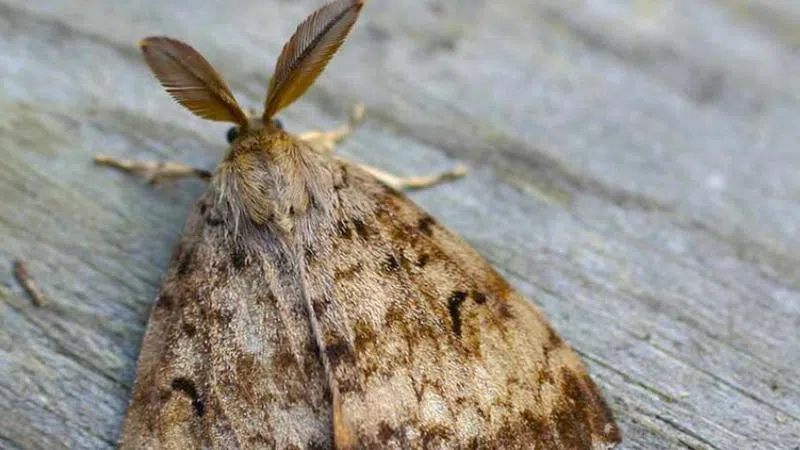
The European spongy moth (Lymantria dispar; formerly referred to as gypsy moth) has been the source of ongoing eradication efforts. (Image Credit: (B.C. Ministry of Agriculture and Food))
pesky moths

Moth eradication paying off in Nanaimo/Oceanside region

Jan 19, 2026 | 5:31 AM

NANAIMO  — No low-flying, moth-attacking planes will be zooming by again this year in the mid-Vancouver Island region following prior intensive efforts.

B.C.’s Ministry of Agriculture and Food identified two regions to fight emerging spongy moth populations with aerial treatments this spring: 121 hectares in Squamish, and 38 hectares in Tsawwassen.

No spraying was done province-wide with the use of insecticide was done last year, which only affects moths and their caterpillars after the substance is ingested, according to the ministry.

“Monitoring results from the Nanaimo, Cowichan Bay and Qualicum areas following the 2024 treatment all indicate the eradication was successful, and further treatments are not required at this time,” a statement to NanaimoNewsNOW from the ministry read.


Regionally, 130 hectares of spraying was done in Nanaimo in 2024, focusing on the Hammond Bay area where a majority of Nanaimo’s 42 spongy moths were trapped the year prior.

The northern end of Qualicum Beach was home to 96 hectares of spraying in 2024, while 126 hectares was covered off in Cowichan Bay.

According to the province, spongy moths pose extensive environmental and economic threats, including moths eating fruit and hazelnut trees, as well as blueberry plants.

European spongy months were introduced from Europe to the northeastern United States in 1869, while the American strain of the moth was first identified in B.C. in 1978.

B.C’s first spraying of the species occurred in 1979.

Since 1997, spongy moths have been trapped in many locations across the Lower Mainland, Vancouver Island and B.C.’s southern interior.

Between 2020 and 2024, 85 spongy moths were trapped between Nanaimo and the Bowser area, according to B.C.’s Agriculture and Food ministry.

Additional information on the B.C. government’s spongy moth eradication efforts can be found here. 

We’re on Bluesky! Stay up to date on news across central Vancouver Island through Bluesky, by following @NanaimoNewsNOW.bsky.social.

info@nanaimonewsnow.com

Follow us on: Twitter (X) | Bluesky | Facebook