Local news. Delivered. Free. Click here and subscribe to our daily news wrap and get our top local stories delivered to your email inbox every evening.
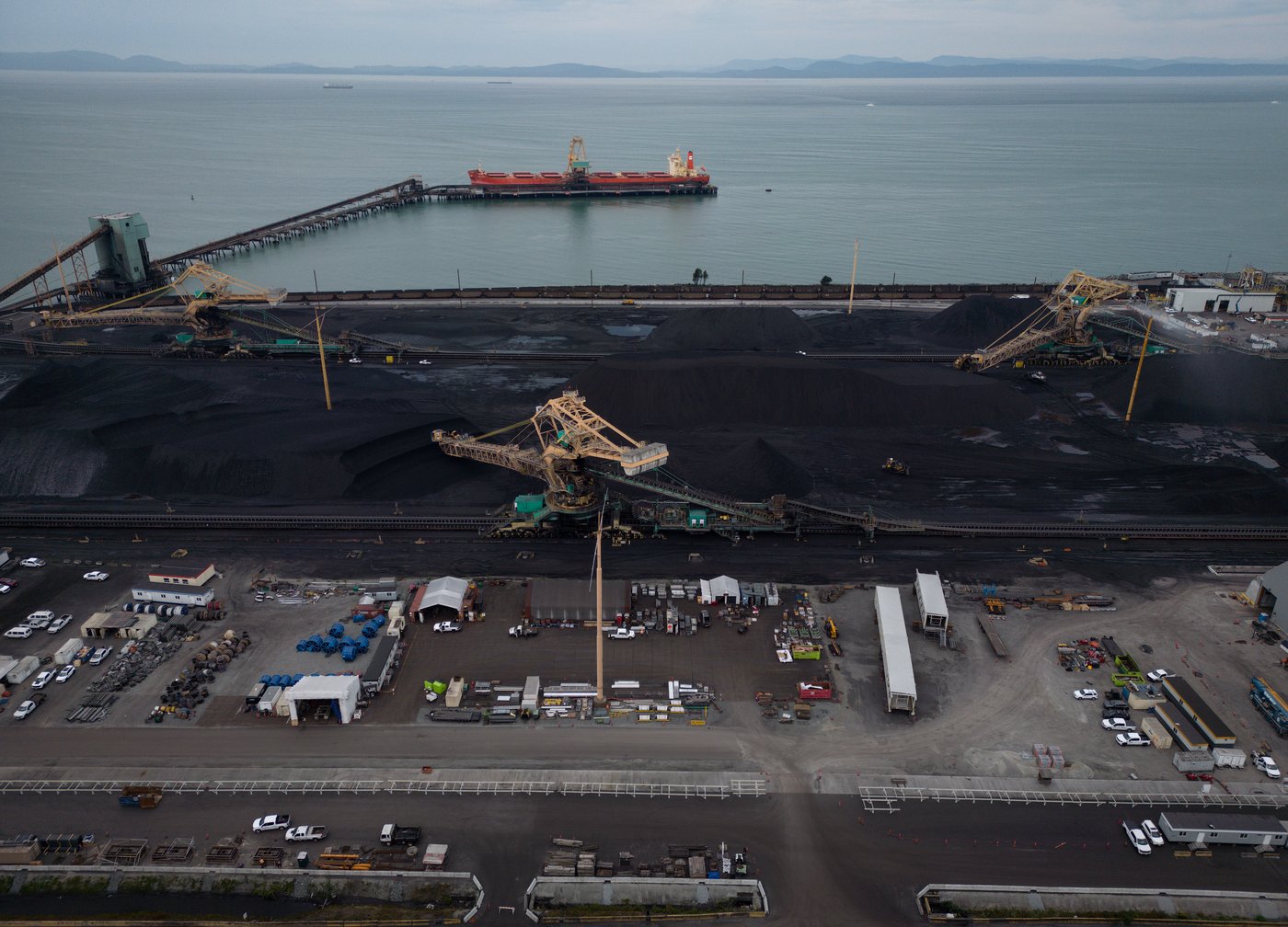
Westshore Terminals' coal export terminal is seen in an aerial view at Roberts Bank in Delta, B.C., on Thursday, July 16, 2026. THE CANADIAN PRESS/Darryl Dyck

Ottawa quietly abandoned promise to end thermal coal exports: auditor

Oct 29, 2026 | 7:06 AM

OTTAWA — Environment and Climate Change Canada abandoned its work on ending thermal coal exports without ever notifying the public and without any record of being directed to do so.

An auditor general report tabled Thursday criticized the move and pointed out Canada is co-chair of an international alliance meant to help countries transition away from coal.

Burning coal is one of the most polluting forms of electricity generation. In 2021, Canada committed to banning thermal coal exports by 2030.

The audit found that while Environment Canada worked for three years to find a way to enforce the ban, that work stopped altogether in November 2024 after lobbying from the coal industry.

“The department did not produce evidence of an official direction to discontinue work on the ban in 2024,” the report says.

The decision to stop the work wasn’t formalized until August 2025, when the federal government was looking for cost-saving measures.

“However, we also found no clear records to show that the department had provided the minister with an assessment of the implications of stopping all work on the export ban,” the report reads.

“While the commitment had been announced internationally and noted in multiple federal strategies, the work on the ban was stopped with no public announcement.”

Thermal coal exports were higher in 2025 than they were in 2021, the auditor general said.

The auditor general’s report criticized the government’s secrecy on the file.

“The lack of public information and updates on the government’s current approach is concerning,” the report said.

“Transparency in decision making provides certainty and enables interested parties, such as provincial and territorial governments, coal mining companies, transportation authorities, shipping terminals, and the labour force to contribute to a just transition.”

This report by The Canadian Press was first published Oct. 29, 2026.

Nick Murray, The Canadian Press