LOCAL NEWS, DELIVERED DAILY. Subscribe to our daily news wrap and get the top stories sent straight to your inbox every evening.
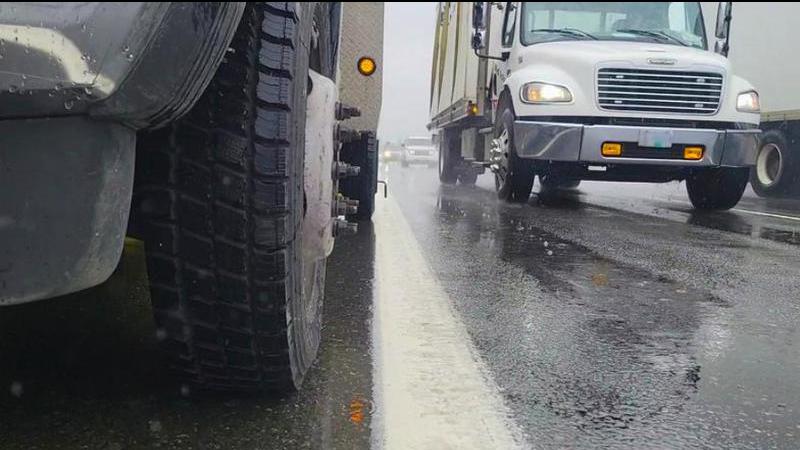
Drivers across the province, including Vancouver Island, are still not getting the message to "slow down and move over", despite multiple campaigns from B.C. Highway Patrol. (File photo/NanaimoNewsNOW)
Slow Down, Move Over

Drivers reminded to watch out for emergency responders, roadside workers

May 17, 2025 | 6:59 AM

NANAIMO — British Columbian drivers appear to need a reminder regarding a law allowing emergency responders and roadside workers the space they need.

A recent survey by BCAA of 810 online respondents revealed 70 per cent of responders had little to no knowledge of BC’s Slow Down, Move Over law.

The survey showed 81 per cent of respondents witnessed poor driving behaviour, including failing to slow down and move over when required.

BC Emergency Health Services public information officer Brian Twaites said being aware of the requirement is particularly relevant now.


“It’s the time of year where we’re seeing more vehicles on the road — spring, summer we’re going to also have more tourists coming to our beautiful province, there are a lot more people on our road.”

The Slow Down, Move Over campaign involves multiple forms of officially designated work vehicles stopped alongside the road with flashing red, blue or yellow lights.

Motorists must move over a lane in a multi-lane highway scenario if safe to do so.

Drivers must reduce speeds to a maximum of 70 kilometres an hour where the speed limit is greater than 80 km/h, while the speed limit is 40 km/h in zones under 80 km/h.

Drivers failing to reduce their speeds or failing to move over are liable to receive a $173 violation ticket and three penalty points.

Amended in 2014 to go beyond police, fire and ambulance personnel, the law added various maintenance and utility workers with flashing yellow lights, including tow and garbage trucks, land surveyors and animal control workers.

In addition to drivers reacting properly to what’s happening ahead, yielding to ambulances, police and firefighters coming from behind with lights and sirens on is also a law in B.C.

Twaites said drivers need to pull over to the closest curb in those situations.

“I think a really important one is to use your mirrors a lot when driving because quite often you won’t hear a siren until it’s coming up quite close to you. If you’re using your mirrors and checking them regularly, you’ll see an emergency vehicle that’s approaching from your rear.”

According to WorkSafeBC, 276 total claims involving people hit by vehicles while working on BC’s roads were reported between 2015 and 2014, including the death of nine workers.

“This data refers to the Cone Zone definition of a worker struck by a motor vehicle. This includes people who work on or beside the road in a work zone, even if they do not primarily work on the road, such as Traffic Control Persons/flaggers, emergency personnel, engineers, landscapers, bus/truck drivers, etc,” the WorkSafeBC statement to NanaimoNewsNOW read.

While WorkSafe BC did not have data specific to the mid-Island region, one of the deceased workers, Raymond Ferguson, was a construction worker killed after being hit by a motorist during late-night work on the Trans Canada Hwy. In September 2021.

A March 2023 incident saw Nanaimo construction workers run for safety after a speeding motorist crashed through a Nanaimo Parkway work zone near the Fifth St. exit.

– with files from Jon De Roo, 97.3 FM The Eagle

Subscribe to our daily news wrap. Local news delivered to your email inbox every evening. Stay up to date on everything Nanaimo and Oceanside.

info@nanaimonewsnow.com

Follow us on: Twitter (X) | Bluesky | Facebook