LOCAL NEWS, DELIVERED DAILY. Subscribe to our daily news wrap and get the top stories sent straight to your inbox every evening.
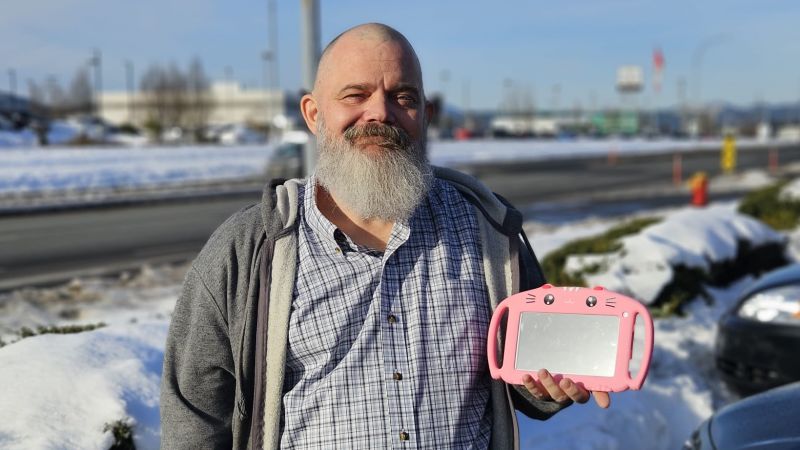
Thomas Pepler's latest venture is a passion project closely tied to his four-year-old granddaughter. He designed a communications app for Amelia to express her wants and needs to parents and caregivers. (Alex Rawnsley/NanaimoNewsNOW)
voice for the voiceless

VIDEO: Nanaimo man coding app to better communicate with non-verbal, autistic granddaughter

Feb 14, 2025 | 2:20 PM

NANAIMO — Frustrated by the limited array of tools available to communicate with his non-verbal, autistic granddaughter, a local man is taking the DIY approach.

Thomas Pepler’s four-year-old granddaughter, Amelia, struggles to communicate her most basic needs to her parents and caregivers, ranging from whether or not she is hungry, to if she has an itchy spot on her back, or is in pain.

Pepler told NanaimoNewsNOW the suite of available communication devices were either underpowered, outdated or cost prohibitive.

“I couldn’t stand the thought of Amelia not being able to communicate her basic needs. Her grandma and I did really look for other options, and we just didn’t find anything that was really suitable for Amelia and during our research, we found that there were a lot of children who were, just based on income, being denied the ability to an application like this.”
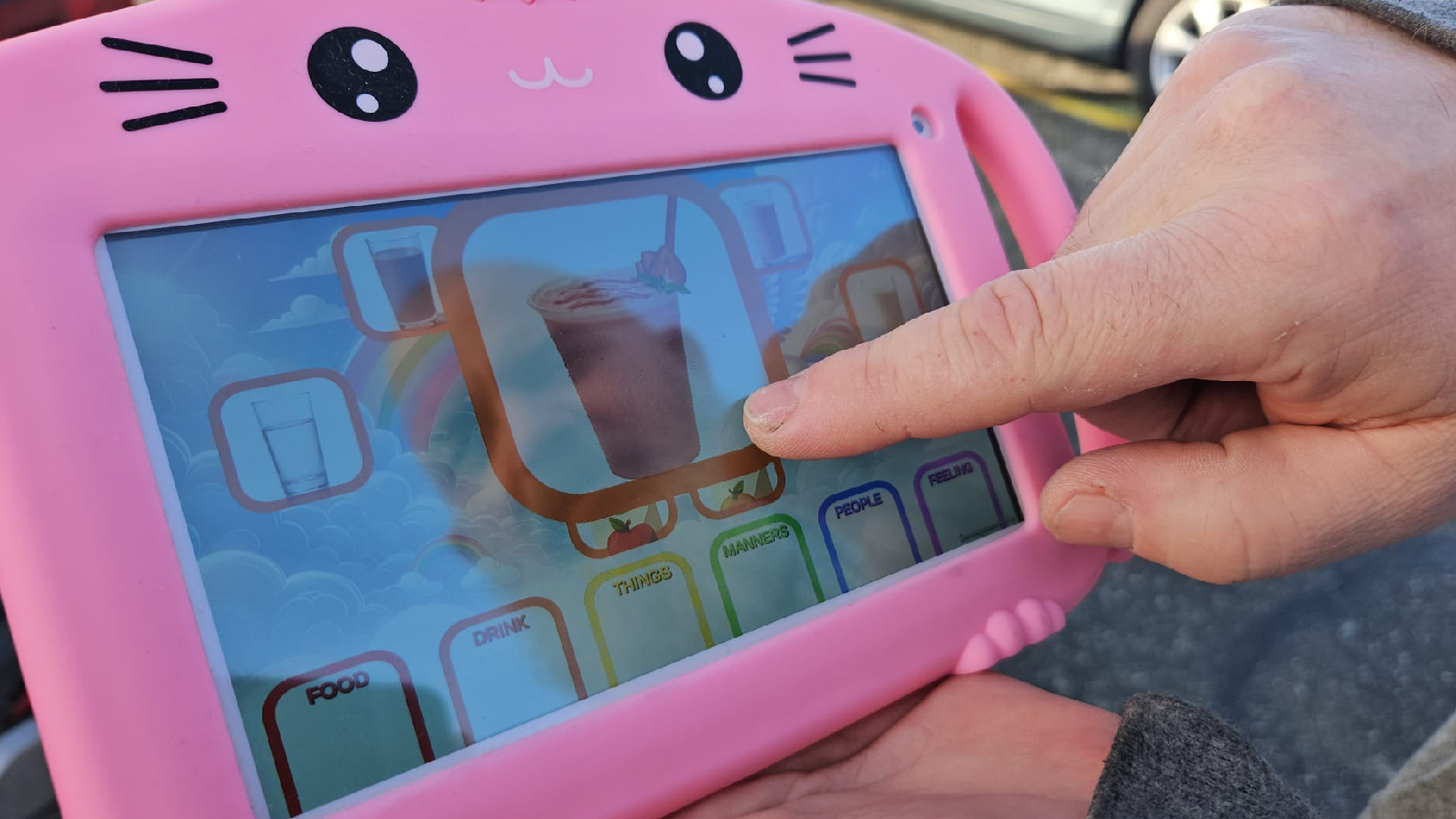
A user’s favourite items are easily displayed with visual and audible feedback to allow non-verbal people to share their needs and wants with others. (Alex Rawnsley/NanaimoNewsNOW)

Using his background in technology throughout some of his past careers, Pepler is slowly building “Amelia’s Voice”, an Android application capable of running on almost any smartphone or tablet.

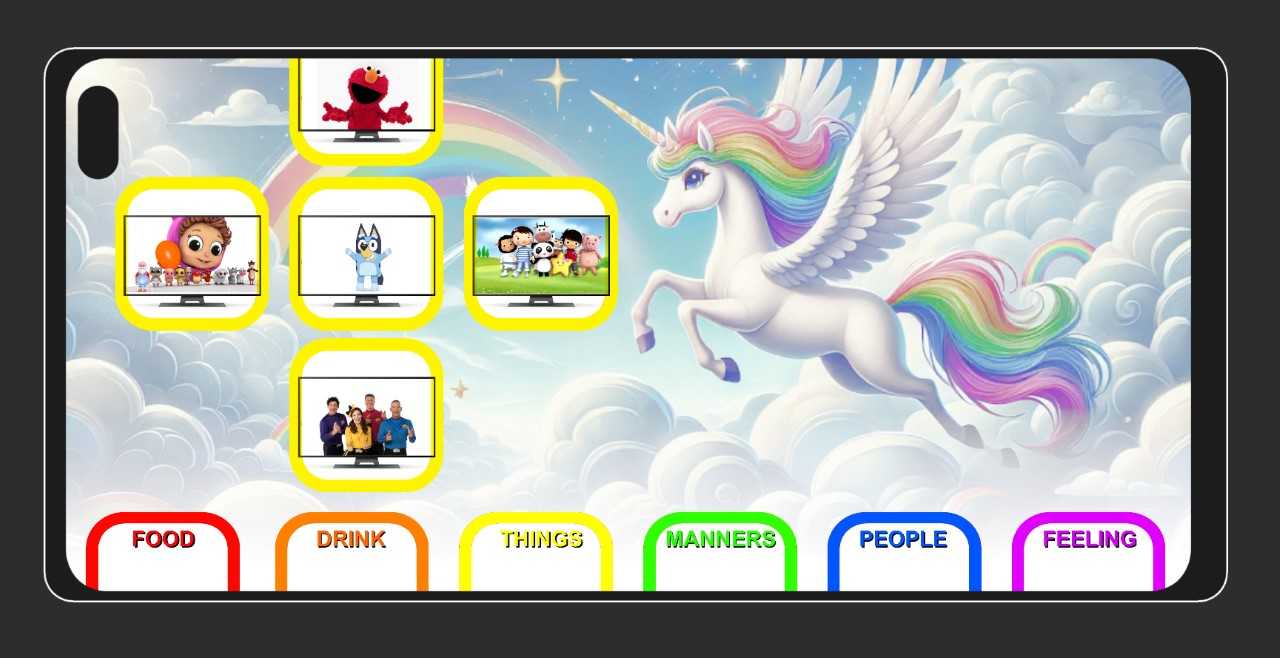
The concept around the app is simple: create various picture-based menus a user can select to ask for food, items or help.

The app will be adjustable by parents and caregivers to update their child’s preferences as they grow.

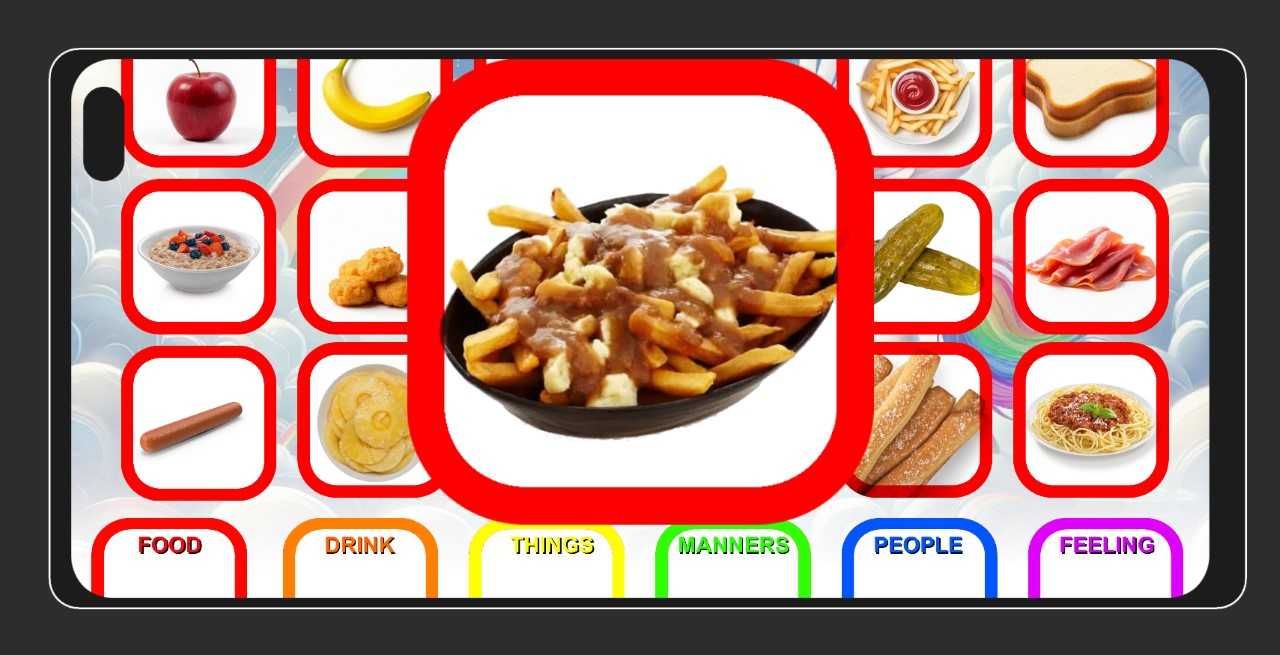
Selections on the app are met with a larger version of the picture the user can then show others, as well as an AI voice read back of their selection.

But even selecting colours, or what pictures to use was a learning adventure in itself.

“When we show her some of the images from these applications, she showed really no interest in the image at all. They’re very limited in colour spectrum and quality of images. Through our research…we found that there’s a lot to do with colour theory and shape theory.”

Muted colours and photo-realistic images have proved successful with Amelia, and other children on the spectrum, according to Pepler’s research.

Additional features also include a sentence builder, where users can string together multiple words and communicate more naturally, similar to word magnets on a fridge.

“Apple” would instead become “I want an apple”, as an example.

A current version of the app is too bright and colourful, according to Pepler, who says his research suggests muted colours and design are more pleasing for those on the autism spectrum. (submitted image/Thomas Pepler)

Pepler hopes to hand over a custom version of his app idea to Amelia by the spring, while a more general version intended for wider distribution is hoped to come by year’s end.

He added he’s offering the app for free and spending a lot of time compressing file sizes to ensure it can run on the oldest, cheapest tablets and devices on the market.

“I really wanted it to run on pretty much your toaster. I’ve been working very hard on file compression…I was able to compress by about 90 per cent and the food page on Amelia’s Voice right now…those data files on my Keurig coffee maker.”

Pepler is keen to connect with other families or professionals who have experience with Autism, to share their advice and input to create an all-encompassing product.

He’s witnessed first-hand the frustration experienced by himself, Amelia and her family at not being able to understand her needs or wants.

“The biggest lesson that my wife and I have learned through this entire experience is that we don’t know anything about autism. We’re very uneducated and there’s just so much to learn to be able to really better enjoy life with Amelia.”

A wide array of items, which can be changed by caregivers, are shown and able to be selected. (submitted image/Thomas Pepler)

To support his work, Pepler has started a GoFundMe project, to purchase updated hardware to speed up development.

“The initial funds will go towards the upgrade, and then any extra funds that we get, we’re going to be using it to just buy as many tablets as we can and we’re going to load Amelia’s Voice on it, and we’re just going to distribute it to any like schools, charities and that sort of thing that could use it.”

Pepler also sees an opportunity to provide the app to care homes, where some residents may be non-verbal.

He’s also developing a similar app called “Where Does It Hurt” which shows the figure of a body and allows users to select the location and severity of their pain.

More on the project is available through a forum Pepler has setup to provide details on his progress.

Subscribe to our daily news wrap. Local news delivered to your email inbox every evening. Stay up to date on everything Nanaimo and Oceanside.

info@nanaimonewsnow.com

Follow us on: Twitter (X) | Bluesky | Facebook