LOCAL NEWS, DELIVERED DAILY. Subscribe to our daily news wrap and get the top stories sent straight to your inbox every evening.
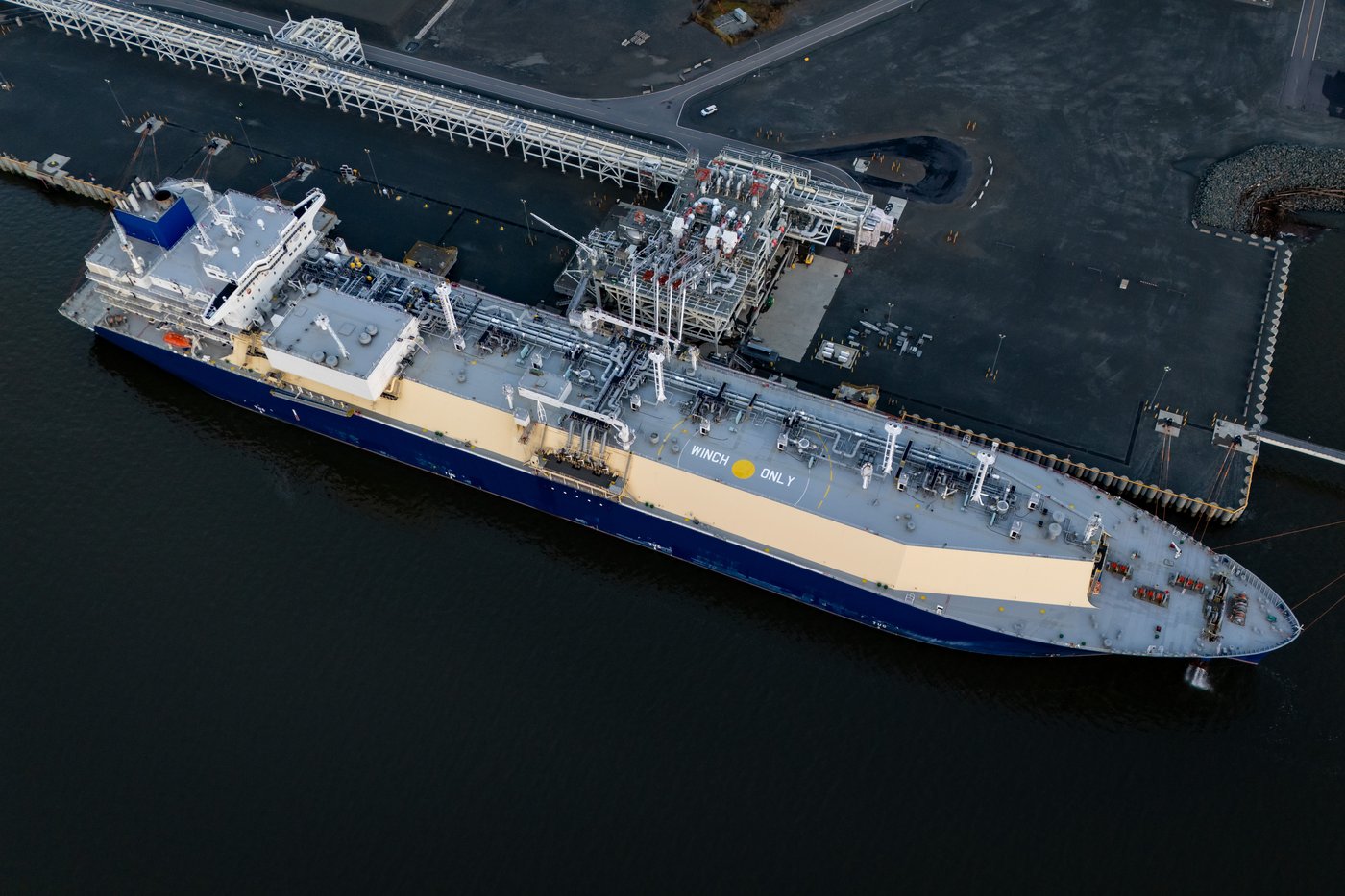
Wudang, a liquefied natural gas (LNG) tanker, fills up at an LNG Canada facility, in an aerial view, in Kitimat, B.C., on Thursday, Nov. 13, 2025. THE CANADIAN PRESS/Ethan Cairns

Environmental advocates call LNG tax incentive a fossil fuel subsidy

Apr 29, 2026 | 1:03 PM

CALGARY — A tax incentive for “low carbon” liquefied natural gas facilities amounts to a government subsidy for the fossil fuel industry at a time when Canada should be pivoting to electrification and renewables, environmental advocates say.

The spring economic update released Tuesday included details around an accelerated capital cost allowance for LNG plants that fall under a certain emissions intensity threshold, a move signalled in the fall budget. The measure would allow LNG companies to claim capital costs against their taxes faster than would otherwise be the case.

“This just means that there’s more taxpayer dollars that are going to fund projects that are financially risky, that are not in the best interests of Canadians, that are really not going to do very much to build our nation’s economy up and stronger,” said Richard Brooks, climate finance director at Stand.earth.

“LNG is the fuel of the past, and what we need to be moving toward is becoming an electrostate, not more of a petrostate.”

LNG is natural gas that has been chilled into a liquid state, enabling it to be shipped overseas on specialized tankers. Industry proponents say enabling more sales abroad would help Canada diversify its export markets beyond the United States, which is by far the biggest customer for our oil and gas. They also tout it as a way to contribute to greater energy security globally, especially since the Middle East war cut off shipments and knocked out production from the Persian Gulf.

Prime Minister Mark Carney has said that Canada “will be ready” to help meet surging global demand for LNG, with the potential to supply 100 million tonnes annually of new exports to Asia. He has described it as “an essential fuel for the energy transition” to supplant dirtier-burning coal. British Columbia’s NDP government has also embraced LNG as an economic driver.

Lisa Baiton, president and CEO of the Canadian Association of Petroleum Producers, said measures in the latest federal economic update “represent concrete steps” toward Ottawa’s goal of making Canada a global energy superpower.

“In particular, the LNG accelerated capital cost allowance and expanding the carbon capture investment tax credit to include enhanced oil recovery brings alignment between the government’s objectives to grow and diversify Canada’s oil and natural gas exports and reduce the economy’s emissions intensity,” she said in a news release.

Canada has one LNG facility operation in Kitimat, B.C., led by Shell Canada and four Asian partners. Shell’s planned $22-billion acquisition of natural gas producer ARC Resources Ltd. is seen as a positive sign an expansion to the LNG Canada plant will go ahead. Several more proposals for the West Coast are under construction or in the planning or regulatory stages.

To be eligible for the accelerated capital cost allowance, LNG facilities would need to have an emissions intensity from its on-site liquefaction activities less than or equal to 0.20 tonnes of carbon dioxide equivalent per tonne of LNG produced annually. The minister of energy and natural resources would need to sign off on whether a facility qualifies.

The accelerated rates would be available for eligible assets acquired on or after Nov. 4, 2025 and up to the end of 2034.

The move “exposes a fundamental credibility gap” both on emissions and on Indigenous engagement, said Jesse Stoeppler, co-executive director of the Skeena Water and Conservation Coalition.

The emissions intensity level needed to be considered “low carbon” is limited to the production of liquefied natural gas on-site. It does not include the impact of gas wells upstream, pipelines shipping the gas across B.C., tankers bringing the gas across the Pacific or burning it for power. Environmental groups also highlight the climate impact of leaking methane — a much more potent greenhouse gas than carbon dioxide — at various points along the supply chain.

“From excluding most emissions in its ‘low-carbon’ LNG definition to acknowledging increased emissions and environmental degradation, the facts contradict Ottawa’s spin and are undermining both its climate credibility and its commitment to Indigenous rights,” said Stoeppler.

Analysis by the International Institute for Sustainable Development suggests the long-term outlook for the LNG sector is “questionable at best,” said Nichole Dusyk, who leads the think tank’s Canada energy transition team.

“We know that there’s a lot of volatility in terms of LNG prices and that when prices dip, global prices dip,” Dusyk said. “It’s hard for Canadian LNG to compete globally because we are a relatively high-cost producer.”

She said the current supply crunch in the Strait of Hormuz is accelerating countries’ transition away from fossil fuels.

“It’s really important that Canadians get answers to those questions about why the government feels like this is the right industry to be really backing wholeheartedly,” said Dusyk.

“Is that economic outlook as rosy as they say it is? Or are they really putting public dollars at risk?”

This report by The Canadian Press was first published April 29, 2026.

Lauren Krugel, The Canadian Press