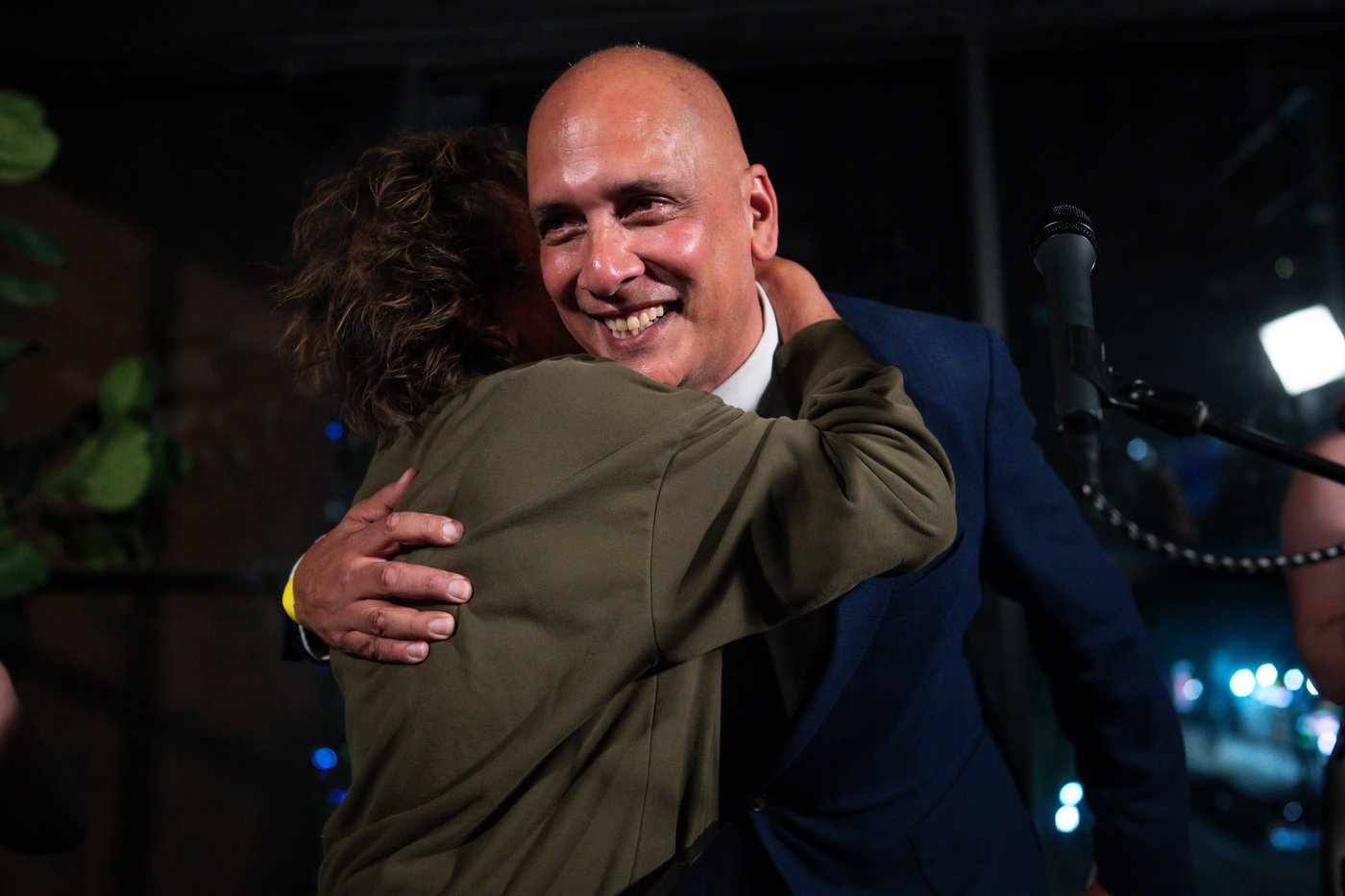
Green Party of Vancouver mayoral candidate Pete Fry hugs his mother Hedy Fry on civic election night in Vancouver, on Saturday, Oct. 17, 2026.THE CANADIAN PRESS/Ethan Cairns

Vancouver progressives take power as Green Pete Fry is elected mayor

Oct 18, 2026 | 4:56 AM

VANCOUVER — Hedy Fry is no stranger to election nights after more than three decades representing her riding in Vancouver as a Liberal member of Parliament.

But election night Saturday, when she watched her son Pete Fry become the city’s next Vancouver mayor, felt different, she said.

Without her name of the ballot, what she felt was pride.

“He’s paid a lot of attention to city politics ever since he was very young. And so, he knows what he wants and he knows how to build bridges,” she said in an interview Sunday.

“He knows how to work with disparate groups and he knows how to find common ground and that, I think, is going to be his strength. It’s going to a tough job, but he’s a hard-working guy.”

Pete Fry will become the city’s first Green mayor after a massive election turnout on Saturday saw progressives take nearly all the seats on city council, the park board and the school board.

Fry, who was first elected as a councillor in 2018, will be working with Greens and candidates from the Coalition of Progressive Electors, or COPE, each taking four seats out of 10, and OneCity Vancouver claiming a ninth seat for the left-of-centre camp.

The business-friendly ABC Party was decimated, with Ken Sim ousted from the mayor’s office and only one councillor elected.

It was a stark turnaround from 2022, when ABC won seven seats on council.

Hedy Fry said that while she was around to offer her son advice if he asked for it, she never gets involved in provincial or municipal politics, so that she can work with whichever group comes to power.

“I was very proud of my son,” she said.

He did this on his own steam without any help at all from me.”

She said the results from Saturday night make it clear that Vancouver voters wanted change and she told her son that its important he not betray the trust that has been placed in him.

“I think that’s what it’s about, trying to do your best to help and to make things better,” she said.

While no single party will have a majority on the new council, the progressive parties have already demonstrated an ability to work together, with COPE’s Stephanie Allen and OneCity’s William Azaroff ending their mayoral campaigns to give Fry a better chance.

Hedy Fry said her son has been building bridges with the people around him since a young age, after growing up in a household that encouraged forming opinions on issues.

“He’s always been the tallest boy in his class ever since he was in kindergarten, and they always called him the gentle giant because he always kind of tried to make peace and bridge gaps,” she said

“And I think he can do that. I think that it’s going to be a hard job for sure, but I think he can do that.

Preliminary results show Fry won handsomely with more than 98,000 votes, about 31,000 ahead of Sim, while the turnout of 209,000 was up 36 per cent compared with four years ago.

Green and COPE candidates won all seven commissioners’ seats on the Park Board, while Green, COPE, and OneCity candidates won all nine school trustee positions.

COPE’s Sean Orr, a socialist council incumbent who is suing Sim for defamation after the mayor falsely accused him of handing out illegal drugs, was the top vote-getter on council with more than 83,000 votes.

He celebrated by sharing a meme on social media showing him staring down Sim with laser eyes.

Richard Johnston, a professor emeritus in political science at the University of British Columbia, said the municipal elections across the province were largely a “bad year for incumbents” and that those who were re-elected, tended to lean more to the left.

“So, that also suggests that in addition to a kind of general anti-incumbent bias, there actually was an ideological tone to the swing,” he said.

He suggested this group of councillors in Vancouver may be more aligned than some of their predecessors and will be able to work together, calling them a “pretty pragmatic crowd.”

He said voters are focused on wanting results.

“I have to believe that many of these, if not most, but I would hope most, even all, have absorbed the ethos that honestly, we should focus on the urban issues, in particular the issues that we think we can deliver directly,” he said.

“As opposed to being nuclear weapons free or properly aligned on Palestine, or all the sort of things that progressives can easily get diverted to, or have in the past.”

He said the group is likely going to have to “stomach” things like the provincial government’s interest in involuntary care for people with drug addictions and mental health concerns, but could also make progress on issues like housing.

The inauguration for the winners is Nov. 2, more than a week after the upcoming provincial election on Oct. 24.

Johnston said the ability for Vancouver’s new progressive council to get things done could be influenced by who takes office in Victoria, suggesting a Conservative government provincially will not be sympathetic to priorities of a progressive municipal council.

“It would mean that to the extent that any reasonable agenda does require support from senior governments, they’re unlikely to see it from a Conservative government,” he said.

This report by The Canadian Press was first published Oct. 18, 2026.

Ashley Joannou, The Canadian Press