LOCAL NEWS, DELIVERED DAILY. Subscribe to our daily news wrap and get the top stories sent straight to your inbox every evening.
Three-month-old Basko is the Nanaimo RCMP's newest recruit, being trained locally for the next few years with hopes of following in the paw prints of his father and grandfather. (Image Credit: Jordan Davidson/NanaimoNewsNOW)
K-9

‘Ready to work:’ Third generation police puppy joins Nanaimo RCMP

Sep 3, 2026 | 5:30 AM

NANAIMO — Local Mounties are welcoming their newest member in training, despite being only three months old.

Basko is a German Shepherd puppy and is currently training in Nanaimo to become a Police Service Dog.

Cst. Jordan Braid with the Nanaimo RCMP Police Dog Unit said while their canine units do help apprehend bad guys, they spend a lot of their time helping to locate missing people.

“Especially dementia patients, people who wandered off into the woods. Our dogs can be utilized for that. The dogs are trained to track for human scent, or to search for human scent, depending on the scenario…and our dogs, if they have to, they are trained to apprehend people, so they can bite people if the circumstances are met for that.”

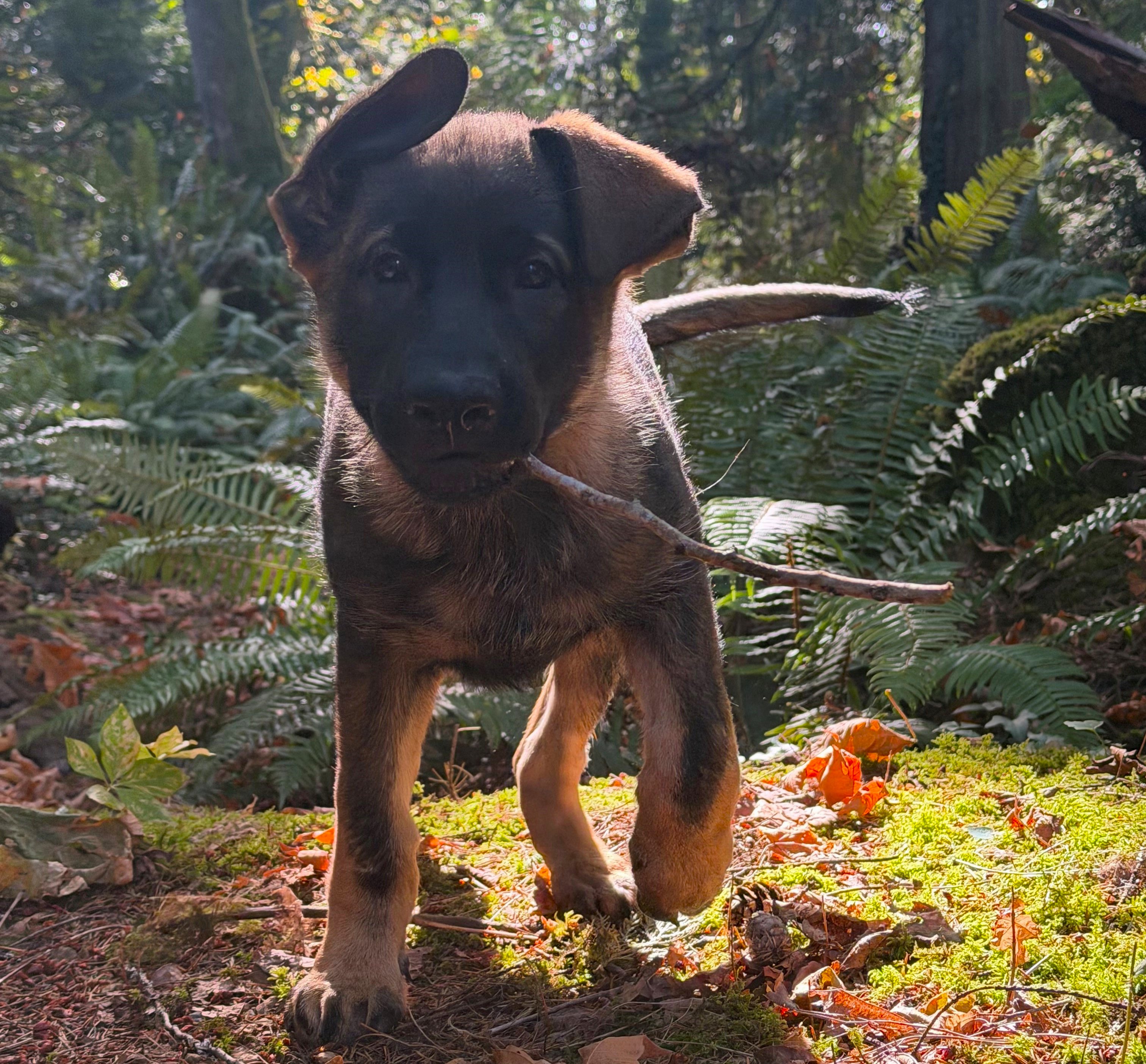
The Nanaimo RCMP said Basko’s training will include being exposed to a “wide variety of environments, people, sounds, animals, and experiences, helping build the confidence and abilities needed for future operational work.” (Image Credit: Nanaimo RCMP)

Braid worked with the Lower Mainland Integrated Police Dog Service for about four years before being transferred back to Nanaimo in December, where he was born and raised.

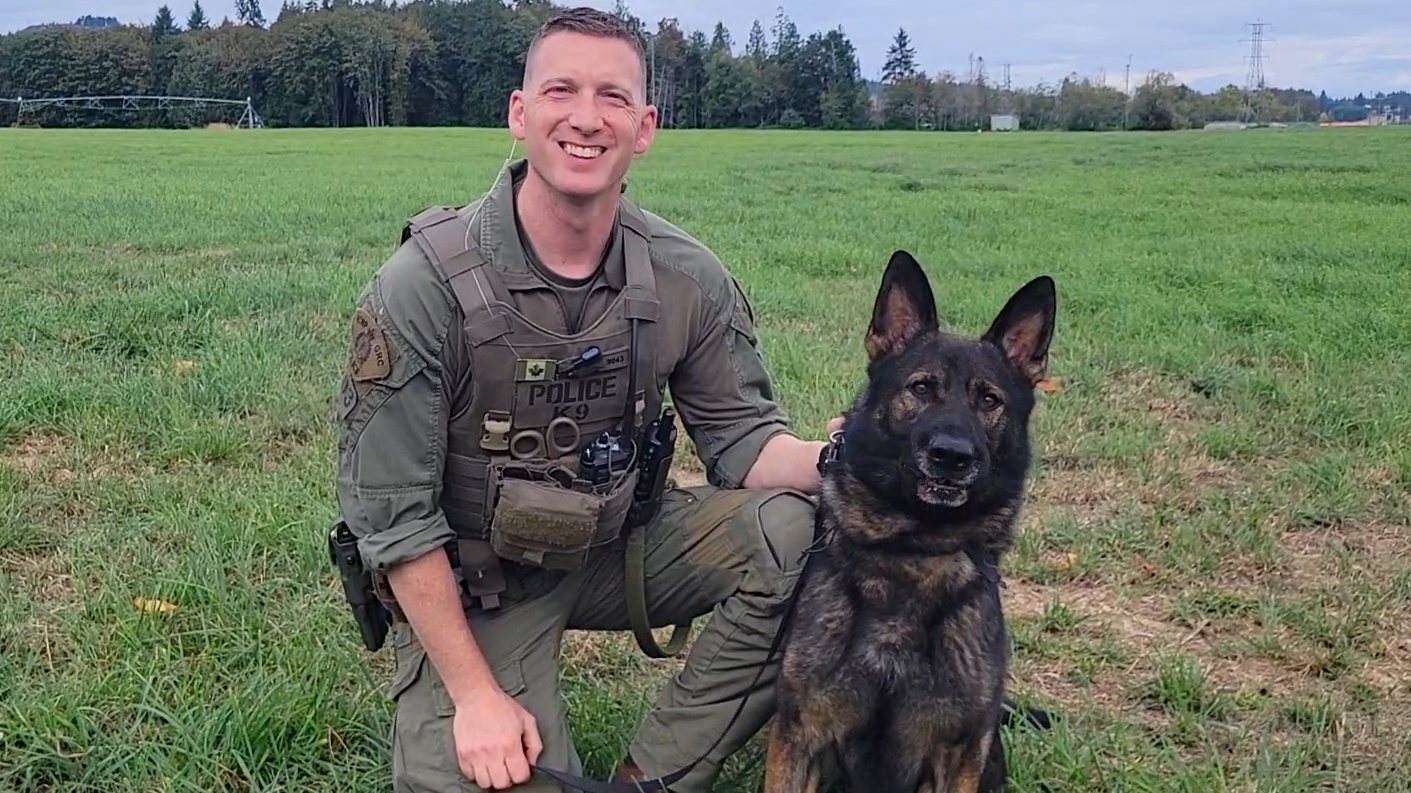
Braid is the current handler of Neon, a five-year-old German Shepherd, who also happens to be the father of Basko.

“It was kind of cool to see that all the work we put in and seeing where this dog is now, his offspring are coming out, and they’re going to be the next generation of police dogs.”

Basko’s impressive lineage doesn’t end there, with his grandfather, Jago, a police dog in Alberta who was tragically killed in the line of duty on June 17, 2021, “while protecting his handler and fellow officers,” according to the RCMP.

Despite being a third-generation police dog, Baird said Basko’s training remains the same as other police dogs, even when noticing similar character traits between Basko and his father Neon.

“It’s one of those things that you keep in your mind, that ‘hey, my dog has some of those’, but you don’t want to start painting the puppy with the same brush. Neon was just about a year and a half old when I got him, and I didn’t raise him, so I didn’t know any of the character flaws or positives that he had.”

Cst. Jordan Braid (L) with his police dog Neon, helping to train his son Basko at a facility outside of Nanaimo.
Cst. Jordan Braid (L) with his police dog Neon, helping to train his son Basko at a facility outside of Nanaimo. (Image Credit: Jordan Davidson/NanaimoNewsNOW)

Basko was born on May 29 at the RCMP Police Dog Service Training Centre in Innisfail, Alberta.

For the next year or so, Basko will be raised locally by another local Mountie working as an imprinter, specially trained to develop future police dogs from puppyhood.

Assessments are done every few months to follow Basko’s progress, ensuring he’s meeting benchmarks during the intense training process.

Once complete, Basko will become a General Duty Dog, helping to locate missing people, find evidence, and apprehend bad guys.

Braid said from there, Basko can undergo further specialty training to detect narcotics, human remains, or explosives, with Neon trained in the latter.

Police dogs also assist with local search and rescue efforts and emergency response teams.

Braid said typically, police dogs retire around the age of nine, with special care taken to ensure they’re able to retire in a home which understands the nature of the working dog, and can continue to keep them active and stimulated during their golden years.

“We’re with these dogs 24/7. You really have to pay attention to the dog, and that’s part of our job as handlers is to see those dogs and make sure that we’re not working them in a situation where they’re not in the best health, or it’s maybe not for them anymore. And sometimes it can be an incident that happens where the dog gets hurt, or they get scared, or something of that nature, where maybe it’s not for them anymore.”

While being raised to be a working dog, Baird said Basko does get to be a typical puppy during his first few months of life, with pets from the general public being allowed for a short time.

However, once he’s progressed in his training, Basko needs to be “neutral” to people so he’s ready to spring into action if called upon.

“We want them to go into any environment, and they’re ready to work. And that’s the big difference with having a police dog: they’re there to do a job, whether it’s to find a bad guy or find a missing person or find some evidence. We can’t have them being excited to see every person that pops up.”

He said if members of the public see Basko out and about with his handler, likely wearing a green vest, feel free to say hello, but don’t expect any puppy cuddles.

“We’re not going to be rude about it, but at a certain point, we have to cut off that association and the petting of the police dogs. But it just kind of depends on what training we’re doing and where we’re at. And a lot of school demos will take the puppies when they’re brand new, so people can pet them and play with them a little bit.”

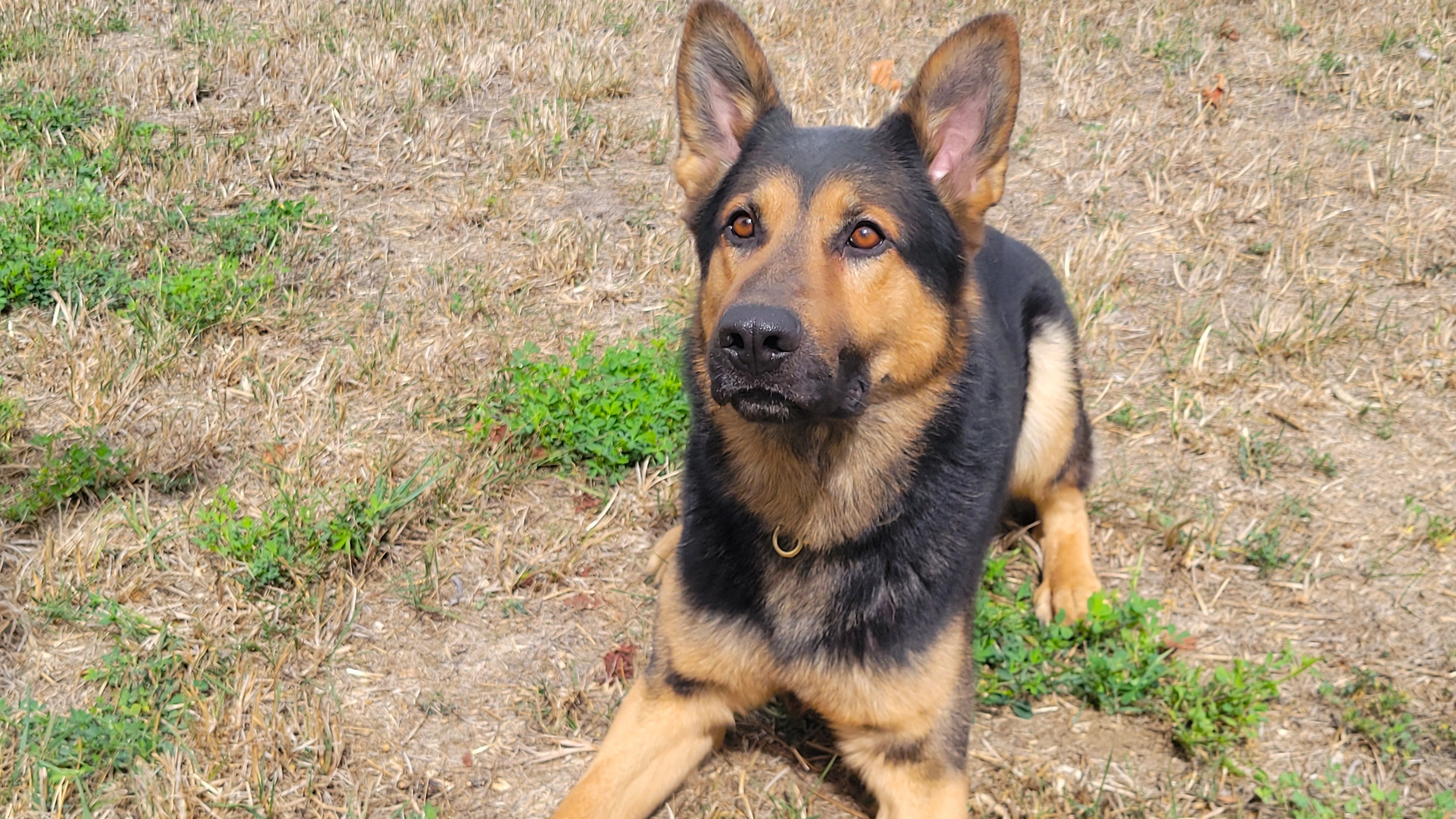
Sox, who turns three in October, is a Nanaimo RCMP General Service Dog who was also on hand to help with Basko's training.
Sox, who turns three in October, is a Nanaimo RCMP General Service Dog who was also on hand to help with Basko’s training. (Image Credit: Jordan Davidson/NanaimoNewsNOW)

Follow us on Facebook. Join Everything Nanaimo on Facebook and stay connected with everything happening on central Vancouver Island.

info@nanaimonewsnow.com

Follow us on: Twitter (X) | Bluesky | Facebook