LOCAL NEWS, DELIVERED DAILY. Subscribe to our daily news wrap and get the top stories sent straight to your inbox every evening.
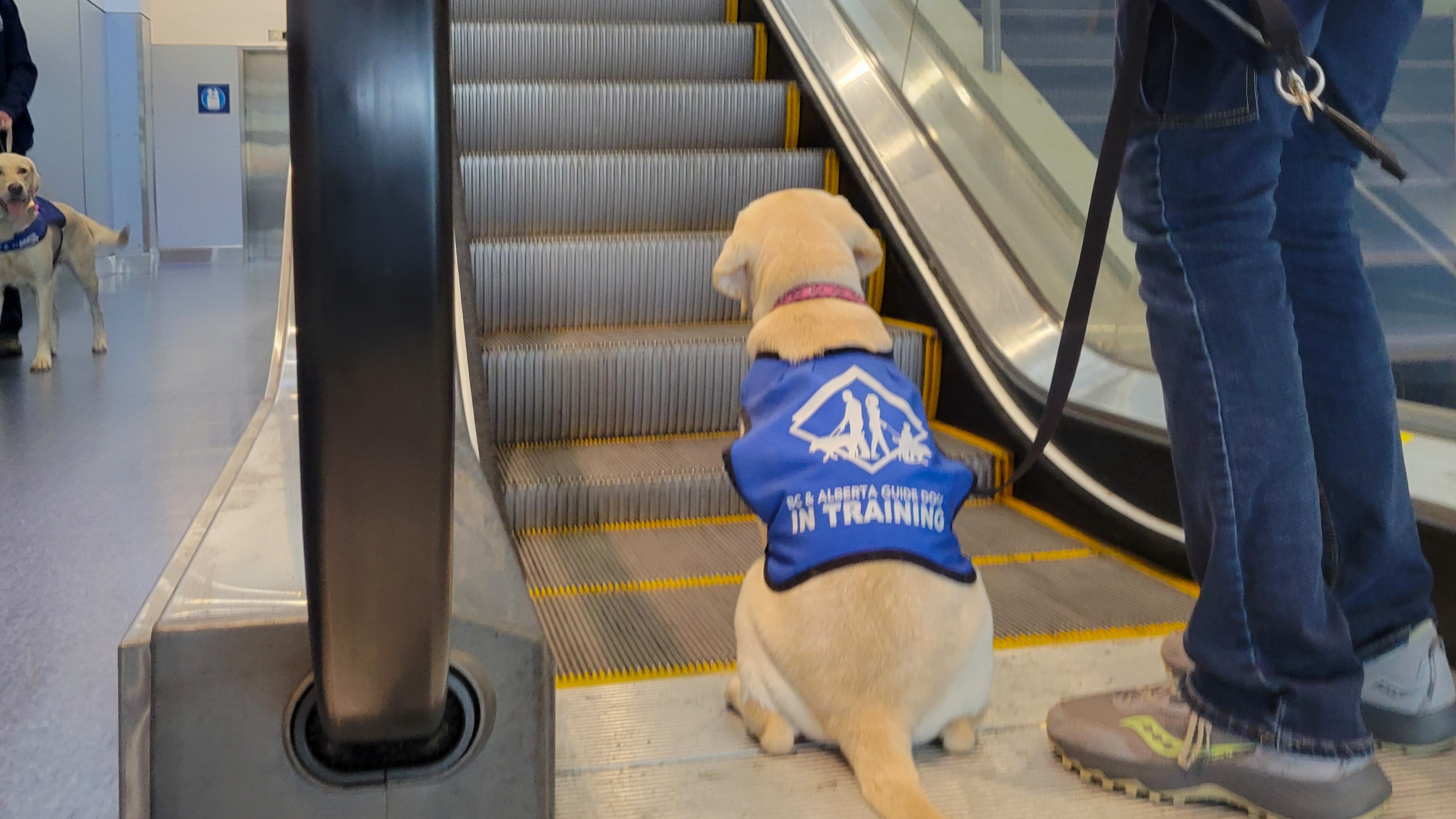
Several Labradors were at Nanaimo's Departure Bay ferry terminal on Wednesday, training to be guide and service dogs by facing public transportation challenges, like an escalator. (Jordan Davidson/NanaimoNewsNOW)
dogs with jobs

Future guide and service dogs escalating confidence at Nanaimo ferry terminal

Oct 29, 2025 | 2:54 PM

NANAIMO — A group of canines in training took over a BC Ferries terminal on Wednesday to confront a challenging obstacle: the escalator.

Volunteer trainers with BC & Alberta Guide Dogs (BCAGD) paid a visit to Nanaimo’s Departure Bay ferry terminal on Oct. 29, to let their future guide and service dogs get their first crack at summiting the metal stairs.

Director of puppy raising Matthias Lenz said it’s a way to help desensitize them to an unfamiliar obstacle.

“If you ever had a dog that doesn’t do escalators, you all of a sudden become aware of how disruptive it can be if you can’t go up the escalator when you arrive at the airport. There is always a way around it, but it complicates life. Our goal is to make life as easy as possible for our clients.”

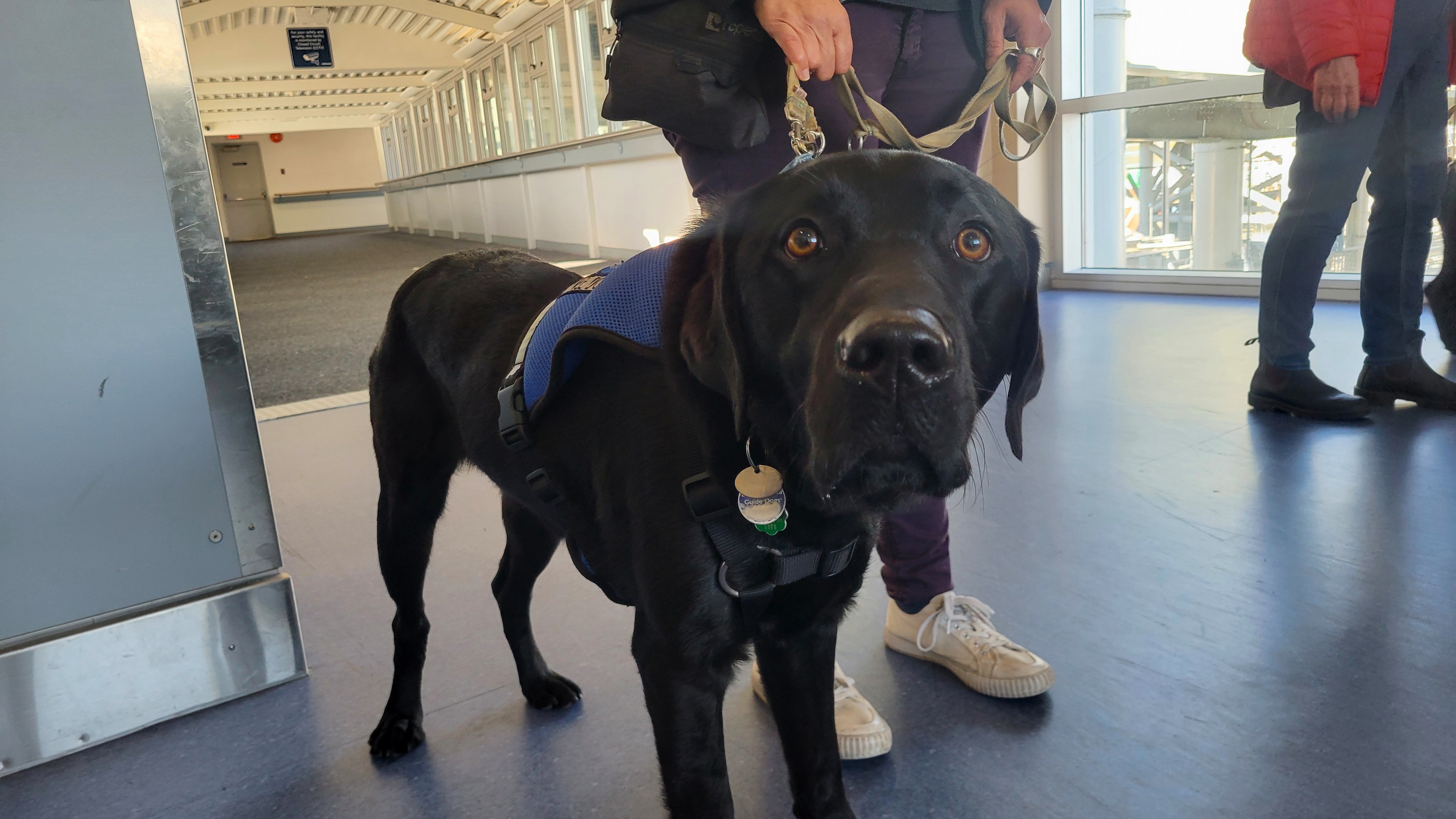
Out of the six black and yellow Labrador Retrievers, four of their volunteer trainings were out of Parksville, with the non-profit BCAGD setting up an office there this year.

Departure Bay terminal had the closest escalator they were able to practice on, with the power off during their first time around.

BC Ferries is allowing multiple opportunities for the dogs to practice over the next several weeks, both with and without the escalator in motion.

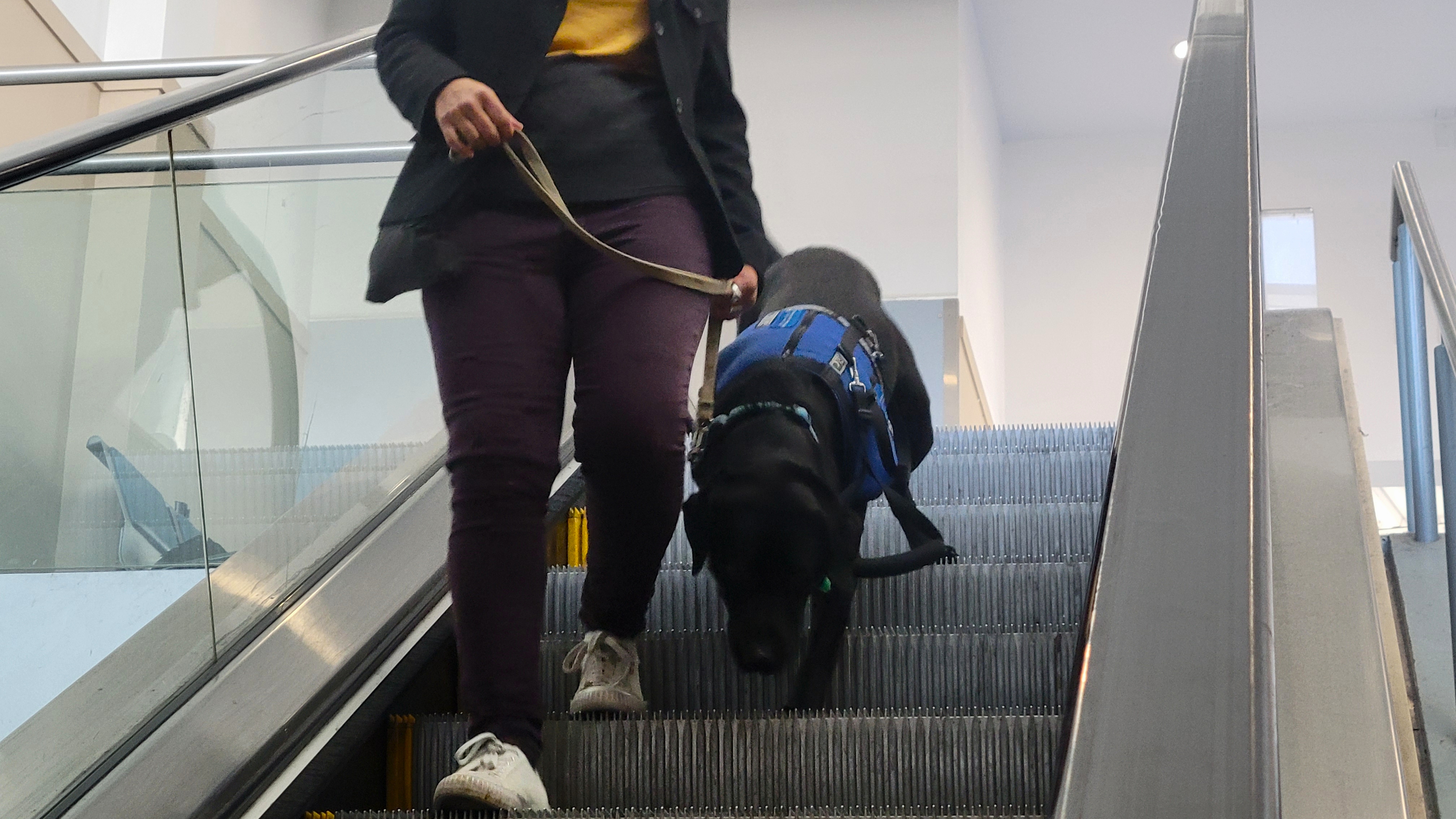
A two-year-old black lab named Fletcher is in his final days of the program and will be heading to his new home on Monday. (Jordan Davidson/NanaimoNewsNOW)

The dogs currently being raised by their volunteers range in age from a few months to two years old, training to work with the visually impaired, kids on the autism spectrum, and Operation Stress Injury (OSI) and PTSD service dogs for veterans and first responders.

Lenz said once the dogs complete their basic training, they decide what job each canine is best suited for.

“There’s some that could do anything and others are more suited to one than the others. We don’t decide that early on, that happens at some point when the dogs are about 14-15 months…we decide whether they go to service, which is autism or PTSD training, or guide.”

As the dog with the most experience, Castrejon’s dog Fletcher was the first up and down the escalator to show the other dogs there was nothing to be afraid of. (Jordan Davidson/NanaimoNewsNOW)

OSI-PTSD service dog instructor Cristina Castrejon said if a dog doesn’t qualify for one of those positions, they can still find families who need a well-trained helper dog, such as an autistic child whose needs aren’t severe enough to qualify for a certified service dog.

She said certain dogs gravitate towards children with a natural intuition of concern and want to be helpful when a child is having strong emotions or energetic outbursts, rather than trying to join in on the excitement.

“These are dogs that are genuinely interested in being around children. They provide a lot of pressure tasks. These are dogs that can be really good at anchoring on a sit, should a child try to flee away when they’re out in public. So they anchor so the child can come back and work with their dog rather than fleeing away.”

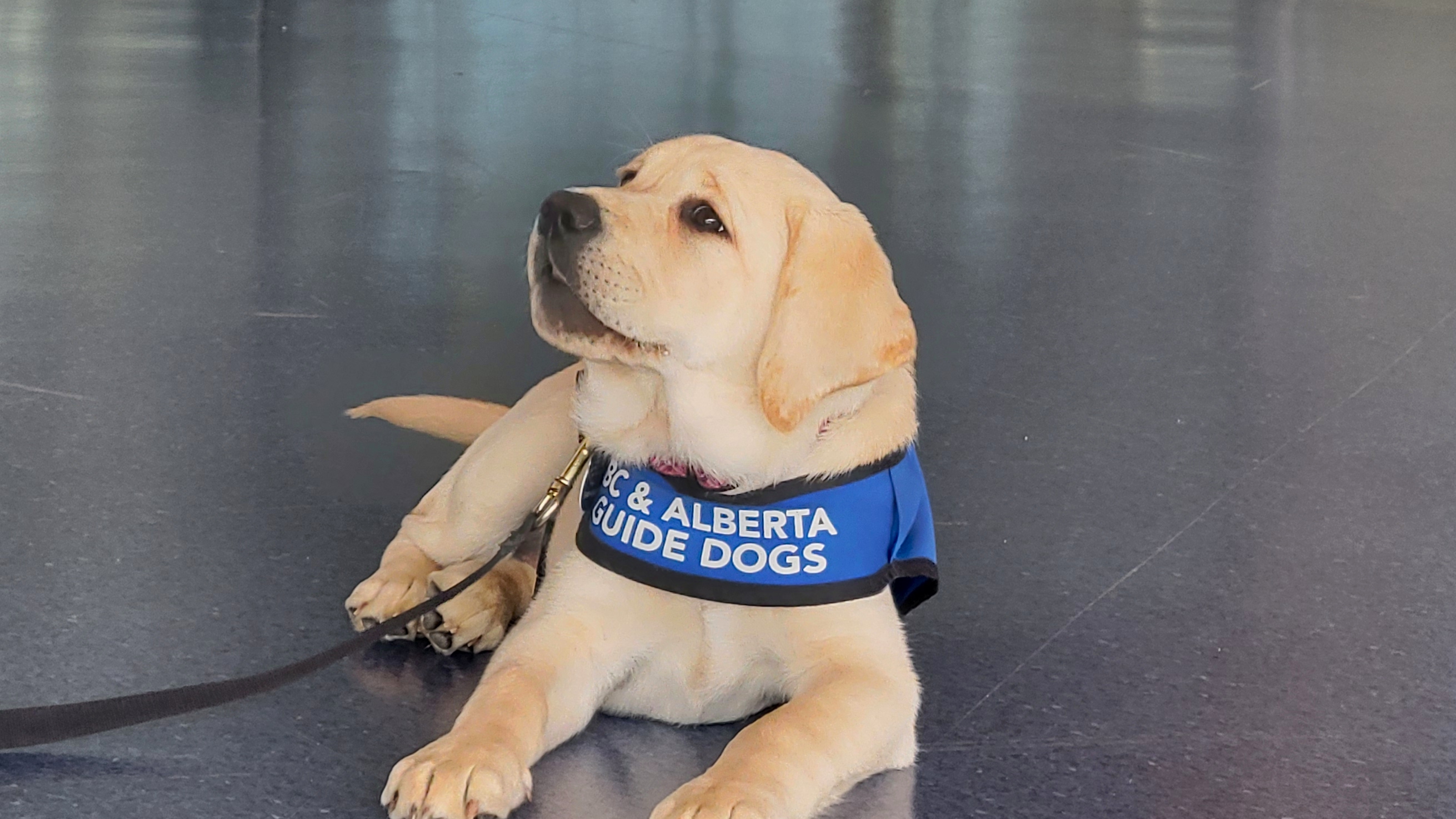
Gibuu, who’s only 13-weeks-old, getting comfortable with the unfamiliar metal flooring of an escalator. (Jordan Davidson/NanaimoNewsNOW)

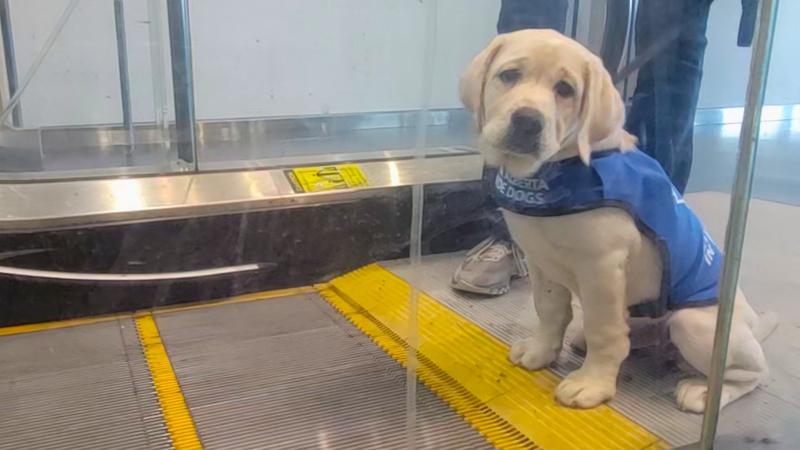
Danielle Swanson is currently training Gibuu, a 13-week-old yellow lab, who’s been in her care for over a month now.

Gibuu is the twelfth dog she has brought into her home to be trained for a higher purpose.

“When I became self-employed, I got a dog, and then I found out I was really good at training dogs. I did it first with St. John Ambulance as a therapy dog, they visit hospitals and old folks homes, and then I saw an ad in the paper for BCAGD, and I thought I’d give it a go, and have been doing it ever since. It’s wonderful.”

With only a bit of hesitation and with a few treats as encouragement, Gibuu made her first journey up an escalator on Wednesday, earning a well deserved break. (Jordan Davidson/NanaimoNewsNOW)

Swanson said puppy trainers are always needed, but they need to have the time, patience, and energy to do it, with no formal training required prior to volunteering.

“It just becomes part of your day…it has always been a wonderful socialization for older people.”

Dogs who complete the program are then accredited through the Assistance Dogs International and the International Guide Dog Federation, allowing them access to indoor public settings worldwide.

More information on BCAGD can be found here on their website.

Subscribe to our daily news wrap. Local news delivered to your email inbox every evening. Stay up to date on everything Nanaimo and Oceanside.

info@nanaimonewsnow.com

Follow us on: Twitter (X) | Bluesky | Facebook