LOCAL NEWS, DELIVERED DAILY. Subscribe to our daily news wrap and get the top stories sent straight to your inbox every evening.
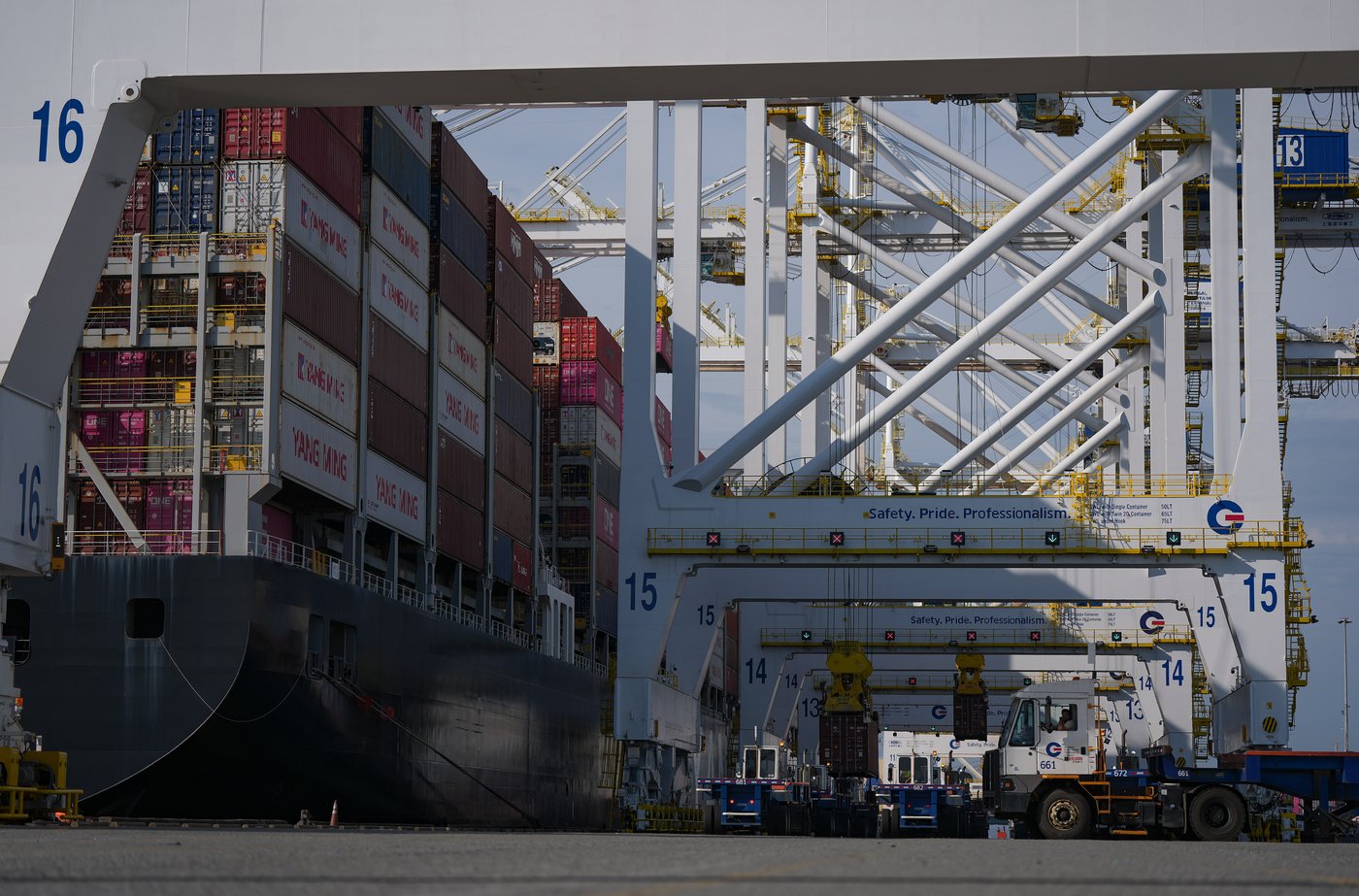
Containers are unloaded from the Yang Ming Throne container ship at Deltaport, at Roberts Bank in Delta, B.C., on Thursday, July 16, 2026. THE CANADIAN PRESS/Darryl Dyck

Oil, grain exports fuel record cargo at Port of Vancouver as trade shifts beyond U.S.

Sep 21, 2026 | 6:10 AM

The head of the Vancouver Fraser Port Authority says surging oil and grain exports drove a record amount of cargo through its gates in the first half of the year as part of a push away from U.S. markets, with Alberta crude fuelling the pivot.

Freight volumes at the Port of Vancouver rode a rising tide of crude oil and canola seed to a three per cent year-over-year increase for the six months ended June 30, the federal agency said Monday.

Port authority chief executive Peter Xotta described “a degree of focus and urgency” to hauling loads — fossil fuels included — to and from countries that lie beyond North American shores.

“The U.S. percentage of crude oil shipments is declining … as those global destinations for Alberta crude increase,” he said in a phone interview from Canada Place, which overlooks Vancouver Harbour.


“China and other Asian destinations are playing a pretty significant role in that.”

As Asia’s oil intake swelled by 24 per cent — America’s shrank, a marked change from 2025. The share of U.S.-bound crude exports via Vancouver dropped to one-fifth versus a third the year before, Xotta said.

In the first half of 2026, crude oil exports from the port rose three per cent year-over-year to a record 12 million tonnes. The increase comes after the Trans Mountain expansion — the twinned pipeline runs between Edmonton and Burnaby, B.C. — opened the floodgate to fossil fuel shipments bound for China and South Korea in 2024.

“The Trans Mountain expansion is really continuing to be a much more dominant commodity in the gateway than we have experienced historically,” Xotta said.

Crude exports accounted for most of the port’s petroleum shipments, but aviation fuel imports also shot up by a quarter as airlines were forced to source their kerosene from regions other than the Middle East, where the Iran war has slowed exports to a trickle. Aviation fuel shipments from South Korea alone jumped 305 per cent to roughly 160,000 tonnes — approaching half of the total — according to the port authority.

Meanwhile, bulk grain exports leaped 14 per cent year-over-year to a record 17.4 million tonnes by the end of June.

“Canadian agriculture is really surging, partly on the back of good crop outcomes in the last year, and frankly the last two years,” Xotta said.

China, Japan and South Korea remained the traditional big consumers of Canadian bulk grain. But containerized shipments of lentils, peas and beans grew by nearly two-thirds as countries such as Bangladesh, India and other “emerging markets” ratcheted up their imports, the CEO said. Europe and Mexico also took in boatloads of canola seed, on top of China.

Beijing imposed 100 per cent tariffs on Canadian canola oil in March 2025 in retaliation for Ottawa’s levies on Chinese electric vehicles, and topped it off with a 76 per cent anti-dumping duty on canola seed in August of that year.

China has since lowered the duty on seeds to 15 per cent, but kept the 100 per cent tariff on canola oil — a barrier that helps explain the 14 per cent year-over-year dip in vegetable and animal oil volumes shipped through Vancouver.

Shipments of chemicals, basic metals and minerals slumped three per cent year-over-year, partly due to U.S. tariffs on steel and aluminum, Xotta said.

Auto volumes through the port rose 10 per cent year-over-year in the first half of 2026, as carmakers sought alternatives to the U.S. market and imports from Japan and South Korea spiked.

Container imports rose two per cent and exports four per cent, a sign of “resilience in the face of an uncertain and unpredictable geopolitical landscape,” Xotta said, noting that the port handles about half of the country’s two-way container trade.

Faced with a more protectionist United States, he said he wants to help Canada double its exports to non-U.S. markets within a decade.

The share of trade to America via the port “for sure” is not on the rise, he said. The United States accounted for less than 15 per cent of Port of Vancouver shipments, roughly on par with the first half of 2025, port figures show.

Americans themselves remain eager to come north. Cruise operations at the port were on course for the busiest season ever, with a record 141 ships depositing 560,000 passengers — at least 60 per cent of them U.S. residents, often en route to Alaska, Xotta said — from February through June.

This report by The Canadian Press was first published Sept. 21, 2026.

Christopher Reynolds, The Canadian Press